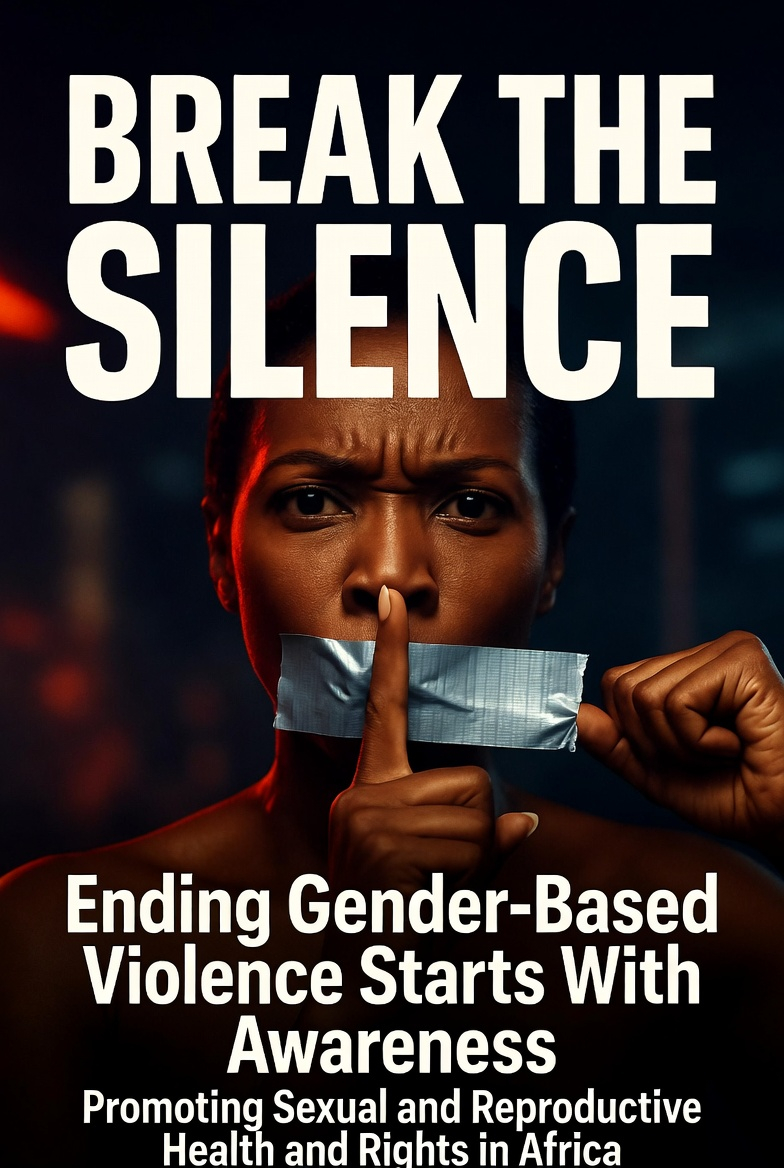
Why Gender-Based Violence Remains a Threat to Women’s Health in Africa
There are some conversations that make us uncomfortable, some truths that are easier to ignore than to face, and some silences that feel safer than speaking out, but when it comes to Gender-Based Violence and the health of millions of women across Africa, comfort is a luxury we can no longer afford. This blog is an invitation to stop looking away, to stop pretending the problem does not exist, and to finally break the silence that has allowed violence to continue for far too long, because awareness is not just about knowing the facts, but about feeling compelled to act, and action is the only thing that will create the change so many women and girls are waiting for.
There is a quiet crisis happening across Africa, one that does not make headlines every day or trend on social media, but it destroys lives, breaks families, and holds back entire nations, and it is called silence, because silence allows violence to continue. Across the continent, millions of women and girls face Gender-Based Violence in their homes, in their communities, and in spaces where they should feel safe, while at the same time, millions are denied access to Sexual and Reproductive Health and Rights services that are essential to their well-being, their dignity, and their survival. The truth we must confront is that these two issues are deeply connected, because you cannot talk about women’s health without talking about the violence they endure, and you cannot talk about gender equality without talking about their right to make decisions about their own bodies.

Let this be the moment the silence finally breaks.
Gender-Based Violence is any harm inflicted on a person because of their gender, and it affects women and girls disproportionately while taking many forms, including physical violence like beating and choking, sexual violence like rape and coercion, emotional and psychological abuse like constant humiliation and control, economic violence like denying a woman the right to work, and harmful traditional practices like child marriage and female genital mutilation. According to the World Health Organization, about one in three women worldwide have experienced either physical or sexual intimate partner violence or non-partner sexual violence in their lifetime, and in some African regions, that number is significantly higher, but statistics only tell part of the story because behind every number is a real woman with dreams, with loved ones, and with a future that violence has threatened or stolen.
When we talk about Gender-Based Violence, we must talk about health because the two cannot be separated, and the physical health consequences alone are devastating, including injuries, chronic pain, untreated wounds, higher risk for sexually transmitted infections including HIV, and higher rates of unintended pregnancies and unsafe abortions which remain a leading cause of maternal death in Africa. GBV is often directly tied to violations of sexual and reproductive rights, because when a woman is raped, her right to choose what happens to her body is stripped away, when she is denied contraception or forced to bear children against her will, her reproductive autonomy is destroyed, and when she cannot access post-rape care including emergency contraception and HIV prophylaxis, her health and future hang in the balance. The wounds you cannot see often cut the deepest, as survivors of GBV experience depression, anxiety, post-traumatic stress disorder, and suicidal thoughts at alarming rates, while the shame and stigma attached to violence often prevent them from seeking help, trapping them in a cycle of silence and suffering.

Silence is not neutral, and silence is not peaceful, but rather silence is the soil in which violence grows, because when communities refuse to talk about GBV, perpetrators face no consequences, when families tell girls to keep quiet to protect the family name, they protect abusers instead of survivors, and when religious and cultural leaders look away, they send a message that some bodies are worth less than others. When women cannot access SRHR services because of stigma, distance, or cost, their health deteriorates in silence, and the truth is that silence kills, slowly, quietly, and devastatingly. This is not just a women’s issue, but a development issue, because when women are healthy and safe, they go to school, they start businesses, they raise strong families, they lead communities, and they drive economies forward, but when women are burdened by violence and denied healthcare, everyone loses, as children lose their mothers, communities lose their leaders, and nations lose the contributions of half their population. The United Nations Sustainable Development Goals cannot be achieved without ending GBV and ensuring universal access to SRHR, because Goal Three on Good Health and Well-Being, Goal Five on Gender Equality, and Goal Sixteen on Peace, Justice, and Strong Institutions all depend on it, and Africa’s future is bright, but it will only be fully realized when every woman and girl can live free from violence and with full control over her own body and health
.
Breaking the silence is not complicated, but it requires courage, and there are many ways each of us can contribute to this important work. We can start conversations by talking about these issues with our friends, our families, and our colleagues, bringing them up in safe spaces, asking questions, listening to survivors, and making it normal to talk about GBV and SRHR. We can educate ourselves and others by learning about the signs of abuse, understanding what services exist for survivors in our communities, knowing our rights and helping others know theirs, sharing accurate information, and challenging myths and misinformation. We can support survivors by believing them when they trust us enough to share their story, by not judging them or asking what they did to provoke it, by offering support without pressure, and by helping them find professional help if they want it. We can speak out against harmful norms by challenging jokes that make light of violence, by questioning traditions that harm women, by calling out victim-blaming when we hear it, and by using our voices to create a culture where abuse is never acceptable. We can advocate for change by demanding better policies and services from our leaders, by supporting organizations working on the front lines, and by using our vote, our voice, and our platform to push for a world where women are safe and healthy.
The silence has lasted long enough, because every day we stay quiet, another woman suffers alone, every day we look away, another girl loses her future, and every day we refuse to act, violence wins, but it does not have to be this way. We have the power to be the generation that ends this, not with loud voices only, but with brave hearts willing to listen, to learn, and to act. Together, we can end the silence, together, we can break the cycle of violence, and together, we can build an Africa where every woman and girl is safe, healthy, and free.
which is committed to raising awareness about Gender-Based Violence and Sexual and Reproductive Health and Rights across Africa, and we invite you to follow us for more conversations that matter. Please share your thoughts in the comments below and let us know what breaking the silence means to you, because together, we can keep the conversation going.
#BreakTheSilence #EndGBV #SRHR #WomensHealth #GenderEquality #AfricaDevelopment #YouthAdvocacy #HerVoiceMatters #NoMoreSilence #TogetherWeCan