
Connectivity Alone Is Not Empowerment, Rethinking Digital Inclusion
In today’s world, connectivity is expanding at an unprecedented pace. Internet penetration is increasing, smartphones are becoming more accessible, and digital platforms are shaping how we communicate, learn, and do business. At first glance, it appears that the digital divide is closing. But connectivity alone is not empowerment. Access to the internet does not automatically translate into opportunity, productivity, or growth. Being online is not the same as being digitally empowered. To truly bridge the digital divide, we must look beyond access and focus on capability.

The Illusion of Access
Internet access is expanding rapidly, but connectivity alone does not guarantee opportunity. True empowerment begins when access is combined with digital literacy and practical skills.
Across many communities, individuals have access to smartphones and internet services. However, access without the knowledge to use digital tools effectively often results in passive consumption rather than active participation. People scroll, browse, and engage socially, but may not know how to leverage digital platforms for education, income generation, or entrepreneurship. Connectivity creates possibility. Skills create progress. Without the ability to navigate digital tools strategically, access risks becoming an illusion of empowerment rather than real transformation.
The Skills Gap: Where Opportunity Is Lost
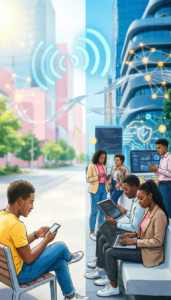
Access to technology without the knowledge to use it effectively creates a digital gap. Digital literacy, cybersecurity awareness, and technical skills are essential for turning connectivity into meaningful impact. The digital economy demands more than presence. It requires competence. Digital literacy involves understanding how to evaluate information, use productivity tools, manage digital identities, and protect personal data. Cybersecurity awareness ensures individuals can participate safely in online spaces. Technical and entrepreneurial skills enable youth, women, and SMEs to convert digital platforms into sustainable economic opportunities. When skills are absent, access becomes underutilized. When skills are present, access becomes transformative. This gap between access and ability is where many opportunities are lost.
Building a Strong Digital Foundation
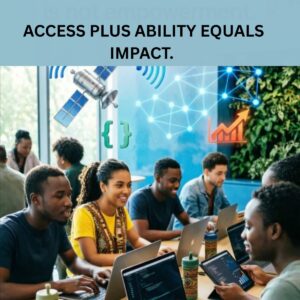
From connectivity to impact
Digital empowerment happens when individuals are equipped with the skills, confidence, and tools to create value online. When access meets ability, inclusion becomes impact and drives sustainable development.
A strong Digital Foundation goes beyond infrastructure. It focuses on:
- Developing relevant digital skills for youth
- Empowering women to participate fully in technology and innovation
- Supporting SMEs in digitizing operations and expanding markets
- Promoting safe, responsible, and secure online environments
Digital inclusion must be intentional. It must combine connectivity with education, access with capability, and technology with human development. Empowerment is not measured by how many people are online. It is measured by how many people can use digital tools to improve their lives and communities.
From Connectivity to Impact
The conversation around digital transformation must evolve. Infrastructure is essential, but it is only the starting point. Real progress happens when individuals are equipped to think critically, innovate confidently, and participate meaningfully in the digital economy. Connectivity alone is not empowerment. Empowerment happens when access meets ability. And when that happens, inclusion becomes impact. The future of digital development will not be defined solely by how connected we are, but by how capable we become.